


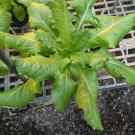
Genomics of Lactuca Species
Cultivated lettuce, Lactuca sativa, is one of the best-studied members of the family and therefore serves as a model for the family. We have been developing genomic resources for Lactuca species within the lettuce genepool and related species in order to facilitate accessing useful genetic variation for lettuce improvement as well as studying genome evolution of this interesting family.
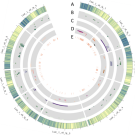
Lettuce Genetics and Breeding
We are developing and applying molecular approaches for lettuce breeding. Lettuce is amenable to classical and molecular genetic analyses. The generation time is usually three to five months, allowing multiple generations each year. We have generated ultra-high density genetic maps for several recombinant line (RIL) populations that have been distributed to the lettuce genetics community.

AI Enhanced Pre-breeding of Lettuce for Sustainable Production
This highly collaborative, multi-state, long-term project provides the foundation of public and private sector lettuce improvement programs. We are training an AI foundation model on the vast amounts of genomic, developmental, physiological, and phenotypic data of cultivated lettuce and its wild relatives for lettuce improvement.

Lettuce downy mildew – Bremia lactucae
Bremia lactucae is one of the most highly specialized oomycete pathogens of plants. It is an obligate biotroph and causes the most important disease of lettuce, one of the top ten most valuable crops in the US. B. lactucae has long been a model for the study of biotrophy and pathogenicity. Reliable information about resistances in relation to the local strains of Bremia is essential for a successful and durable disease control strategy.
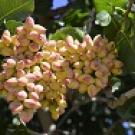
Pistachio
In collaboration with other labs at UC Davis, the Michelmore Lab investigates pistachio loci associated with vigor, precocity, and sex.

Lettuce diseases and disorders
As part of our basic research and plant breeding efforts we have analyzed multiple disease resistance loci and morphological traits of importance for lettuce improvement. We are developing molecular markers tightly linked to these loci as well as identifying candidate genes. These can be used to introduce desirable traits into advanced breeding lines and commercial cultivars.